Research labs (CNRS/LAAS, Inria) — first unit 'Pyrene'
unknown · unverified
- No deployment-specific evidence recorded.
Watch changes · Evidence history · Cited research export · Plan a pilot
Each pillar is scored 0–100 from published specs, then weighted into the HMX. Compare it only with other humanoid robots — each category uses its own reference scales. See the full methodology →
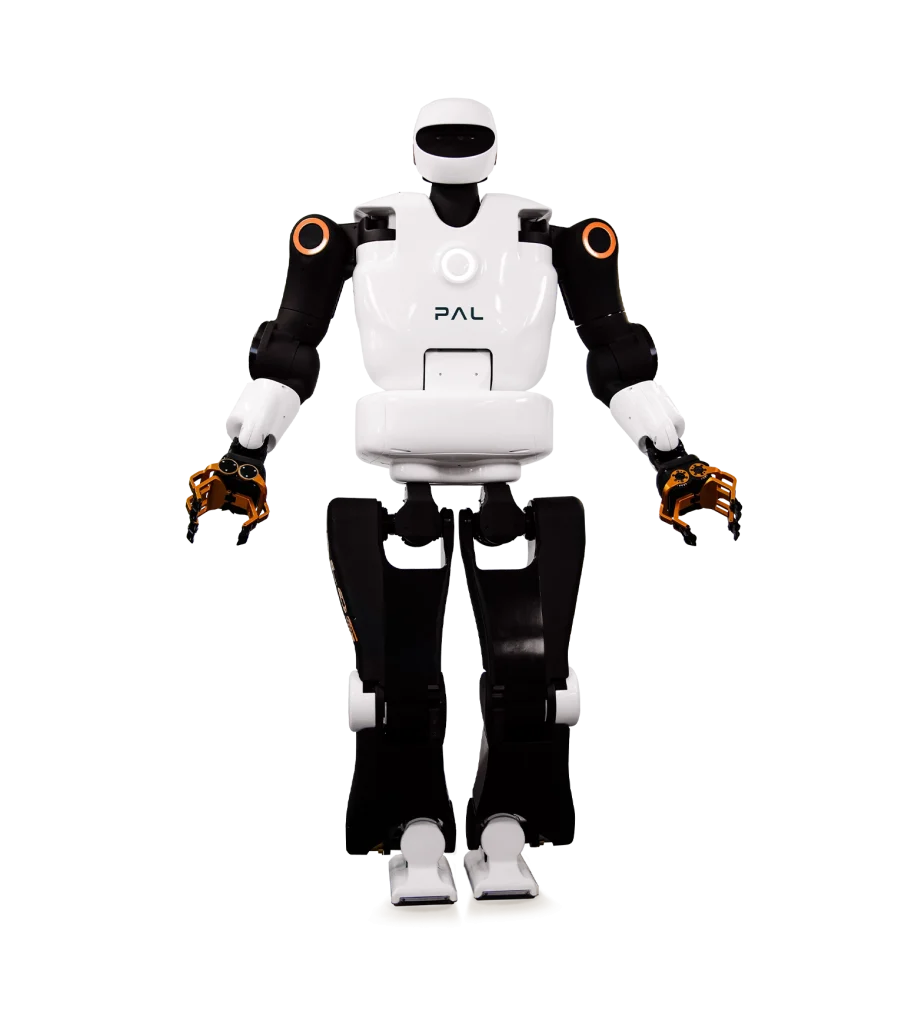
Fully electric, torque-controlled research humanoid (32 DOF) with 6 kg payload per fully-extended arm; sold to robotics labs rather than commercially deployed.
Legacy mentions are unverified. A partnership or announcement is not proof of an active deployment. Evidence labels do not change HMX v2 scoring.
Research labs (CNRS/LAAS, Inria) — first unit 'Pyrene'
unknown · unverified
Evidence is attached to each value. Robot-wide source links do not verify every field. A source about an older value cannot support the current specification.
Declared shared origins are grouped. Distinct domains and unclassified origins do not establish independent evidence.
No field-specific evidence recorded. This value is unverified at field level.
Declared shared origins are grouped. Distinct domains and unclassified origins do not establish independent evidence.
No field-specific evidence recorded. This value is unverified at field level.
Declared shared origins are grouped. Distinct domains and unclassified origins do not establish independent evidence.
No field-specific evidence recorded. This value is unverified at field level.
Declared shared origins are grouped. Distinct domains and unclassified origins do not establish independent evidence.
No field-specific evidence recorded. This value is unverified at field level.
Declared shared origins are grouped. Distinct domains and unclassified origins do not establish independent evidence.
No field-specific evidence recorded. This value is unverified at field level.
Declared shared origins are grouped. Distinct domains and unclassified origins do not establish independent evidence.
No field-specific evidence recorded. This value is unverified at field level.
Declared shared origins are grouped. Distinct domains and unclassified origins do not establish independent evidence.
No field-specific evidence recorded. This value is unverified at field level.
Declared shared origins are grouped. Distinct domains and unclassified origins do not establish independent evidence.
No field-specific evidence recorded. This value is unverified at field level.
Declared shared origins are grouped. Distinct domains and unclassified origins do not establish independent evidence.
No field-specific evidence recorded. This value is unverified at field level.
Declared shared origins are grouped. Distinct domains and unclassified origins do not establish independent evidence.
No field-specific evidence recorded. This value is unverified at field level.
Declared shared origins are grouped. Distinct domains and unclassified origins do not establish independent evidence.
No field-specific evidence recorded. This value is unverified at field level.
Declared shared origins are grouped. Distinct domains and unclassified origins do not establish independent evidence.
No field-specific evidence recorded. This value is unverified at field level.
Declared shared origins are grouped. Distinct domains and unclassified origins do not establish independent evidence.
No field-specific evidence recorded. This value is unverified at field level.
Declared shared origins are grouped. Distinct domains and unclassified origins do not establish independent evidence.
No field-specific evidence recorded. This value is unverified at field level.
Declared shared origins are grouped. Distinct domains and unclassified origins do not establish independent evidence.
No field-specific evidence recorded. This value is unverified at field level.
Declared shared origins are grouped. Distinct domains and unclassified origins do not establish independent evidence.
No field-specific evidence recorded. This value is unverified at field level.
Declared shared origins are grouped. Distinct domains and unclassified origins do not establish independent evidence.
No field-specific evidence recorded. This value is unverified at field level.
Declared shared origins are grouped. Distinct domains and unclassified origins do not establish independent evidence.
No field-specific evidence recorded. This value is unverified at field level.
TALOS is a humanoid robot from PAL Robotics in Spain, and it is commercially available. It scores 33.9 on the Humanoid Metric, ranking 127th of 156.
On the leaderboard it sits between GITAI G1 (HMX 33.9) and Pollen Reachy 2 (HMX 33.7).
Against the 156 humanoid robots ranked, its clearest strength is commercial readiness & deployment (99.0 against a median of 67.0) and its clearest weakness is autonomy & intelligence (20.0 against 70.0).
By the published specifications, it runs shorter per charge than 93% of the 68 other humanoid robots publishing a runtime (1.5 h), is heavier than 90% of the 115 other humanoid robots publishing a weight (95 kg) and is slower than 89% of the 62 other humanoid robots publishing a speed (0.83 m/s).
Its published price of $900,000 is below 0% of the 55 other humanoid robots with a public price — nearer the expensive end, with a median published price of $29,900.
On autonomy, it has demonstrated autonomy only in research settings. 1 deployment claim is on record, none yet backed by a customer, the press or the vendor.
Its specifications carry a high-confidence grade from 3 cited sources, as of 2026-06.
Task capability is not inferred from hardware specifications or general autonomy labels. Find robots for a task →
No task-specific evidence recorded. Capability remains unknown.
Machine-readable: HIS Layer 0 manifest · what's this?
The PAL Robotics TALOS has a published price of $900,000.
Published specifications: payload 6 kg, speed 0.83 m/s, runtime 1.5 h, degrees of freedom 32, degrees of freedom per hand 1, height 175 cm, weight 95 kg.
The PAL Robotics TALOS has demonstrated autonomy only in research settings. The grade reflects demonstrations, not marketing claims.
On the HMX, the PAL Robotics TALOS scores 33.9 and the GITAI G1 33.9. The PAL Robotics TALOS leads on mobility & locomotion, hardware & engineering and commercial readiness & deployment; the GITAI G1 leads on autonomy & intelligence, manipulation & dexterity and ecosystem & viability.
The PAL Robotics TALOS is made by PAL Robotics, in Spain.
