Each pillar is scored 0–100 from published specs, then weighted into the
HMX. Compare it only with other
humanoid robots —
each category uses its own reference scales.
See the full methodology →
Notable
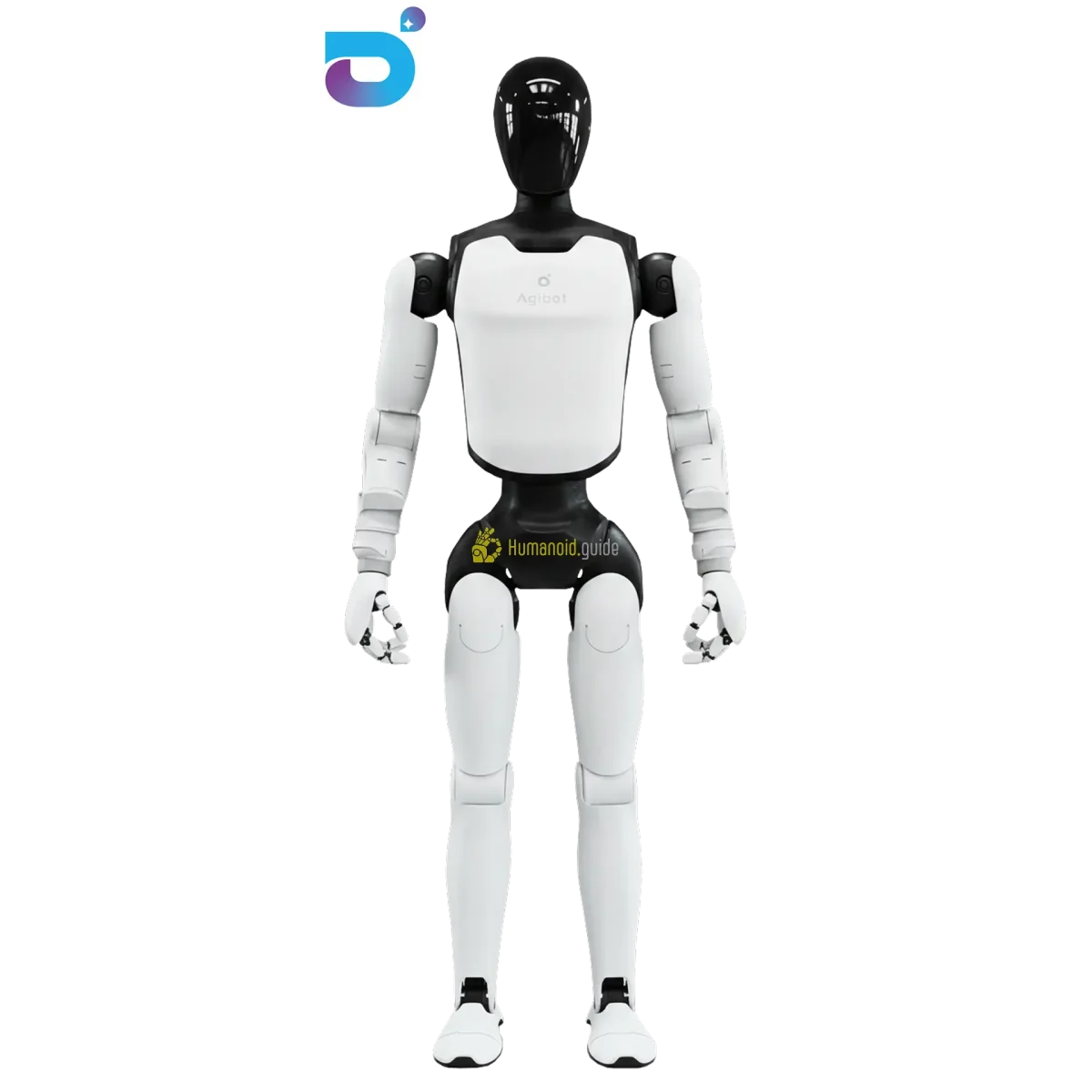
New-generation full-size humanoid unveiled Feb 2026 with a flexible waist and lightweight exoskeleton legs, demonstrated performing martial-arts moves and autonomous table tennis. Uses UWB positioning for synchronized multi-robot stage shows; mass production planned for 2026.
Specifications
Evidence is attached to each value. Robot-wide source links do not verify every field. A source about an older value cannot support the current specification.
Height
173.0 cm
unverified · 0 evidence records
Declared shared origins are grouped. Distinct domains and unclassified origins do not establish independent evidence.
No field-specific evidence recorded. This value is unverified at field level.
Weight
55.0 kg
unverified · 0 evidence records
Declared shared origins are grouped. Distinct domains and unclassified origins do not establish independent evidence.
No field-specific evidence recorded. This value is unverified at field level.
Payload
3.0 kg
unverified · 0 evidence records
Declared shared origins are grouped. Distinct domains and unclassified origins do not establish independent evidence.
No field-specific evidence recorded. This value is unverified at field level.
Travel speed
Undisclosed
unverified · 0 evidence records
Declared shared origins are grouped. Distinct domains and unclassified origins do not establish independent evidence.
No field-specific evidence recorded. This value is unverified at field level.
Runtime
10.0 h
unverified · 1 evidence records
Declared shared origins are grouped. Distinct domains and unclassified origins do not establish independent evidence.
Conditions: A3 base user-manual battery-life specification. Section 2.5 uses 1:1 standing/walking time and says speed/load affect endurance. Section 2.2 instead describes 6 h standing plus over 4 h walking; retain both disclosures. Hot swapping extends operation, not one-charge endurance. Manufacturer-reported; research recheck 2026-10-14; no human source attestation.
Conditions: A3 base total specified battery-system energy. Manufacturer lists 1152 Wh and dual battery compartments; it does not specify two 1152 Wh packs. Manufacturer-reported; research recheck 2026-10-14; no human source attestation.
Yuanzheng A3 (Expedition A3) is a humanoid robot from AgiBot in China, and it is at the prototype stage. It scores 47.6 on the Humanoid Metric, ranking 83rd of 169.
On the leaderboard it sits between AeiROBOT ALICE 4 (HMX 47.8) and Kawasaki Heavy Industries RHP Kaleido 9 (HMX 46.9).
Against the 169 humanoid robots ranked, its clearest strength is mobility & locomotion (72.5 against a median of 30.0) and its clearest weakness is commercial readiness & deployment (28.0 against 67.0).
By the published specifications, it runs longer per charge than 94% of the 69 other humanoid robots publishing a runtime (10 h).
Its published price of $45,000 is below 47% of the 62 other humanoid robots with a public price — nearer the expensive end, with a median published price of $42,000.
On autonomy, it has demonstrated autonomy under human supervision, not unsupervised work. No deployment is on record.
Its specifications carry a medium-confidence grade from 2 cited sources, as of 2026-06.
Task evidence
Task capability is not inferred from hardware specifications or general autonomy labels. Find robots for a task →
No task-specific evidence recorded. Capability remains unknown.
Machine-readable: HIS Layer 0 manifest at /robot/agibot-expedition-a3/manifest.json, with a free API key · what's this?
Frequently asked questions about the AgiBot Yuanzheng A3 (Expedition A3)
How much does the AgiBot Yuanzheng A3 (Expedition A3) cost?
The AgiBot Yuanzheng A3 (Expedition A3) has a published price of $45,000.
What are the AgiBot Yuanzheng A3 (Expedition A3)'s specs?
Published specifications: payload 3 kg, runtime 10 h, height 173 cm, weight 55 kg. Not published: speed, degrees of freedom and degrees of freedom per hand.
Is the AgiBot Yuanzheng A3 (Expedition A3) autonomous?
The AgiBot Yuanzheng A3 (Expedition A3) has demonstrated autonomy under human supervision, not unsupervised work. The grade reflects demonstrations, not marketing claims.
How does the AgiBot Yuanzheng A3 (Expedition A3) compare to the AeiROBOT ALICE 4?
On the HMX, the AgiBot Yuanzheng A3 (Expedition A3) scores 47.6 and the AeiROBOT ALICE 4 47.8. The AgiBot Yuanzheng A3 (Expedition A3) leads on mobility & locomotion and ecosystem & viability; the AeiROBOT ALICE 4 leads on autonomy & intelligence, manipulation & dexterity, hardware & engineering and commercial readiness & deployment.
Who makes the AgiBot Yuanzheng A3 (Expedition A3)?
The AgiBot Yuanzheng A3 (Expedition A3) is made by AgiBot, in China.
Version 202· 15 Sep 2026, 04:28 UTC· score then 47.6
No field changed; the score was recalculated.
Changed by a direct correction or a scoring update, not a research proposal.
First recorded version· 6 Sep 2026, 05:24 UTC· score then 47.6
The record as it stood when full copies began to be kept.
Data confidence: medium. Some figures for this robot rest on single or conflicting sources, or on manufacturer/aggregator material rather than independent reporting. Treat second-order specs as approximate. Fields marked “—” were genuinely undisclosed and left blank rather than estimated.